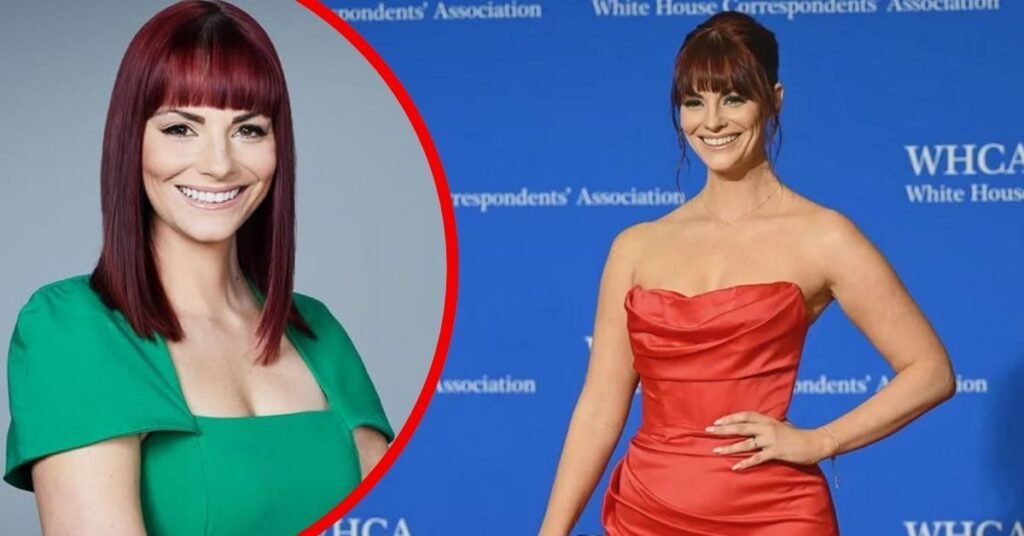

Who is Melanie Zanona?
Melanie Zanona is a prominent political journalist known for her insightful reporting and analysis of political events. Her career has been marked by a series of impressive milestones, reflecting her dedication and expertise in the field of journalism. Zanona obtained her Bachelor’s degree in Communication from the University of Southern California, where she honed her skills in critical thinking and storytelling, essential components for a successful career in journalism.
Following her education, Melanie began her professional journey at a local news station, where she gained valuable experience in reporting and news production. This foundational period allowed her to develop a keen sense for political coverage. She later transitioned to covering national politics, which positioned her alongside some of the most influential figures in the field. Zanona’s ability to convey complex political issues in an accessible manner has earned her recognition and respect among both peers and audiences.
Currently, Melanie Zanona serves as a congressional reporter for a major media outlet, where she provides in-depth coverage of legislative activities and political developments in Washington D.C. Her reporting not only highlights current events but also offers analytical insights that contribute to the broader understanding of political dynamics in the United States. Over the years, Zanona has been recognized with several awards for her contributions to journalism, showcasing her commitment to informing the public about the intricacies of governance.
In addition to her reporting, Melanie has made significant contributions to discussions about journalism ethics and the role of media in democracy. Her commitment to factual reporting and transparency continues to set a benchmark in the industry, affirming her status as a leading voice in political journalism. Understanding Melanie Zanona’s career trajectory and her influence helps contextualize discussions about her earnings, such as the intricacies surrounding the topic of Melanie Zanona salary.
Analyzing Melanie Zanona’s Salary
Melanie Zanona, recognized for her contributions as a political journalist, operates within a competitive sector where earnings vary significantly based on numerous factors, including experience, location, and the media outlet’s stature. It is crucial to contextualize her salary within the broader landscape of journalism, particularly in politics, where the demand for skilled reporting remains high. Generally, political journalists in similar positions to Zanona can expect to earn between $60,000 and $100,000 annually, with more established reporters potentially earning upwards of $120,000, depending on their tenure and reputation.
As a reporter for a prominent news organization, Melanie Zanona likely benefits from the upper echelon of this salary range. Although specific figures related to her earnings are often not publicly disclosed, industry insiders suggest that established journalists with her level of expertise and a focus on political coverage command salaries towards the upper end of the spectrum. It is also essential to consider benefits and bonuses that often accompany such roles, which can substantially enhance overall compensation.
Furthermore, the increasing importance of political news in today’s media landscape has also led to an uptick in salary scales for journalists specializing in this field. As political reporting becomes critical for audience engagement, organizations may allocate higher budgets to attract and retain talented individuals like Melanie Zanona. Therefore, while direct information about Melanie Zanona’s salary may not be explicitly available, it can be reasonably inferred that she enjoys a compensation package that reflects her skills and the current market trends for political reporters. In conclusion, Melanie Zanona’s salary likely aligns with industry standards, reinforcing her role as a significant contributor in political journalism.
Factors Influencing Her Earnings
Melanie Zanona’s salary reflects a multitude of factors that are pivotal in determining the compensation of political journalists. One of the foremost components influencing her earnings is her level of experience within the industry. Having progressed through various roles in journalism, her accumulated expertise positions her as a valuable asset to her current media outlet. Seasoned journalists typically command higher salaries, as their insights and skills often lead to more significant contributions to their organizations.
Furthermore, the media outlet for which Zanona works plays a crucial role in shaping her earning potential. Major news organizations tend to offer competitive salaries designed to attract top talent, which includes journalists renowned for their political reporting. The financial health and reputation of the organization can thus greatly impact the overall compensation package offered to professionals like Melanie Zanona.
Geographic location is another essential aspect. Journalists operating in metropolitan cities or regions with higher living costs usually receive salaries that reflect these economic realities. For example, working in Washington D.C., which is a hub for political journalism and reporting, can lead to elevated salaries due to the significance and demand of the work involved. This is particularly relevant for journalists like Zanona, whose focus on political issues necessitates proximity to key events and figures.
Current trends in political journalism, inclusive of greater reliance on digital platforms and social media, also contribute to salary determinations. Journalists who successfully engage with audiences through social media can enhance their visibility and, consequently, their marketability. Public engagement is increasingly becoming an important metric for compensation in the field, affecting overall salary figures. Thus, Melanie Zanona’s salary is a product of her experience, the prestige of her employer, geographic factors, and the evolving landscape of journalism today.
The Broader Impact of Journalistic Salaries
The salary structures within journalism play a significant role in shaping the industry as a whole. As the profession grapples with numerous challenges, including diminishing revenues and increased competition from digital platforms, the issue of fair compensation emerges as a critical topic. For journalists like Melanie Zanona, understanding their salary expectations is not solely a matter of personal finance; it also reflects the broader trends affecting media organizations. The disparity in earnings can lead to a variety of consequences that impact the quality of reporting and public trust in the media.
One of the most glaring challenges journalists face revolves around the lack of equitable salaries, which often correlates with issues of diversity and representation within the industry. Undercompensation frequently affects minority journalists more profoundly, contributing to an imbalance that hampers the diversity of voices in newsrooms. This, in turn, has a cascading effect on the narratives presented to the public, limiting perspectives and reinforcing existing biases. Recognizing the importance of equitable pay is crucial for fostering a diverse and informed journalistic landscape.
Moreover, when journalists are underpaid, the quality of their work may suffer due to increased stress and the necessity to chase additional income through side jobs or freelance work. As a result, the commitment to producing high-quality, unbiased reporting may diminish, leading audiences to question the integrity of the news they consume. Therefore, structuring salaries fairly is not just about individual remuneration, but rather it has profound implications for journalism’s role in society.
In conclusion, maintaining fair salary practices within journalism is paramount in ensuring not only the well-being of professionals such as Melanie Zanona but also the health of the media landscape as a whole. Only through equitable compensation can the journalistic industry thrive, fostering a diverse range of voices and perspectives essential for a robust democracy.